
English| EUR
Suggested for you
More currencies
Choose a language
The Oaxacan coast hosts one of Mexico's most consistent marine turtle conservation programs, with releases happening nearly every evening during nesting season. Understanding when turtle activity peaks and how daily releases are structured helps visitors plan meaningful participation without disrupting the delicate ecology these programs protect.
Quick answer
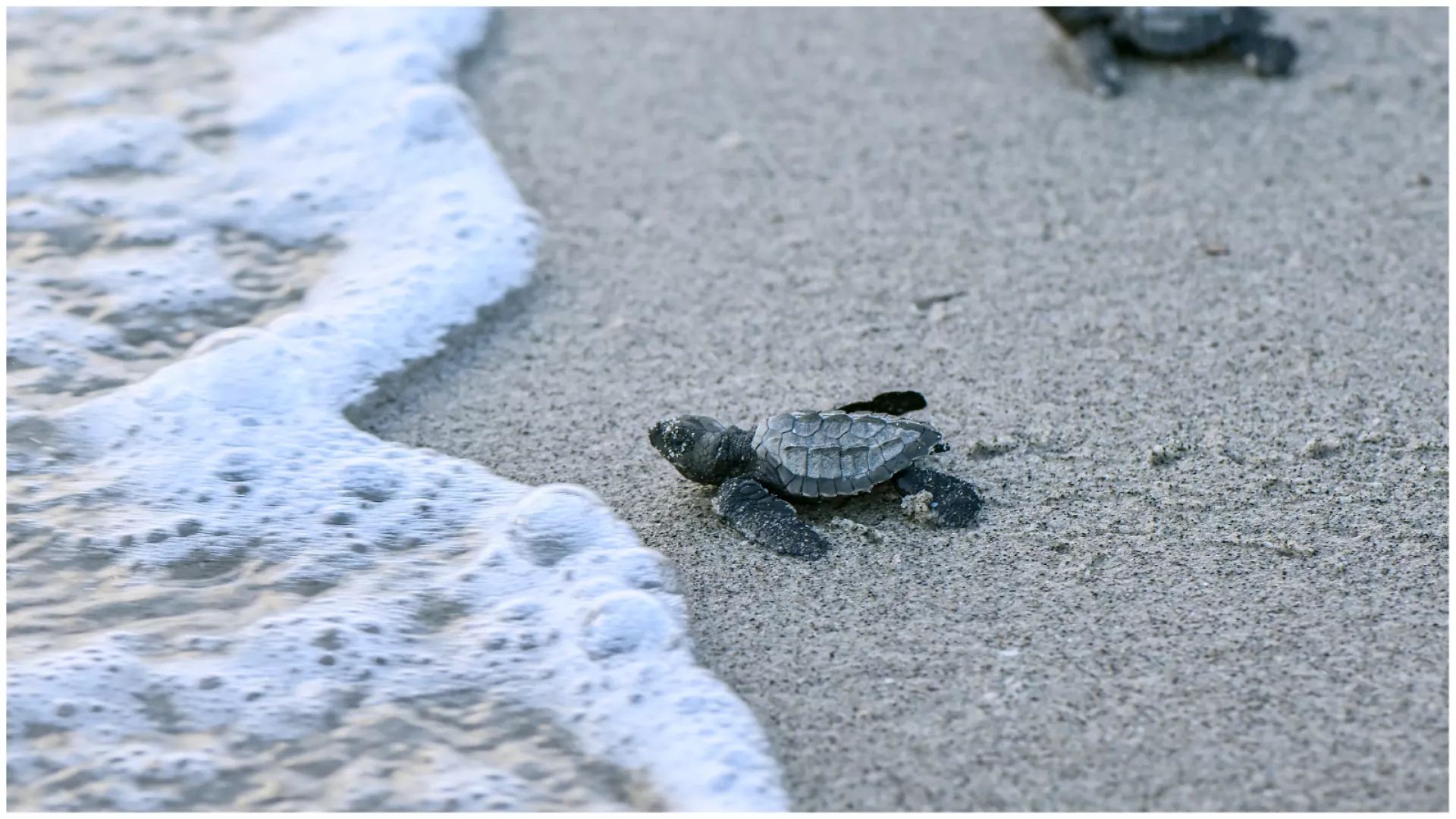
Turtle release season Puerto Escondido runs from July through late January, with peak nesting activity between August and November. Daily releases occur at Playa Bacocho between 17:00 and 19:00, with arrival before 18:00 recommended to ensure participation. The season aligns with the natural nesting cycles of olive ridley, leatherback, and black turtles that use Oaxaca's beaches as nesting grounds.
Three marine turtle species nest along Puerto Escondido's coast, each following migratory patterns refined over millions of years. Olive ridley turtles dominate the nesting activity, arriving in waves between July and December. Leatherbacks appear sporadically throughout the season, while the critically endangered black turtle nests primarily from September through November. Conservation teams patrol Playa Bacocho and adjacent stretches nightly, relocating eggs from vulnerable sections of beach to protected hatcheries where incubation can proceed safely. The turtle release season Puerto Escondido centers around a rhythm dictated by biology rather than tourism. Female turtles nest during high tide under cover of darkness, burying clutches of 80 to 120 eggs in sand chambers excavated with their rear flippers. Incubation takes 45 to 60 days depending on sand temperature, meaning eggs laid in July produce hatchlings ready for release in late August or September. This staggered hatching cycle sustains daily release opportunities throughout the season, though volume fluctuates based on how many nests were laid weeks earlier. Playa Bacocho serves as the primary public release site, managed by the Vive Mar conservation collective. The 200 MXN conservation donation supports nest monitoring, hatchery maintenance, and community education programs that have dramatically reduced poaching and disturbance. Releases happen in the late afternoon rather than after dark, a compromise between hatchling survival and public engagement. Research indicates that releases timed near sunset allow hatchlings to orient using natural light cues while minimizing predation risk from frigatebirds and other daylight predators. Seasonal timing determines the character of the experience. August and September see the highest hatchling numbers, with some evenings producing releases of several hundred turtles simultaneously. October remains active but with smaller, more intimate groups. November marks the transition period as olive ridley nesting tapers off, though late-season black turtle nests can produce releases into December. January sees sporadic activity from the final nests of the cycle. Visitors planning around the turtle release season Puerto Escondido should recognize that wildlife schedules resist precision—some evenings produce abundant releases, others yield only a handful of hatchlings, and occasionally none at all.
“Three marine turtle species nest along Puerto Escondido's coast, each following migratory patterns refined over millions of years.”
Turtle releases in Puerto Escondido occur year-round, though activity levels vary seasonally based on nesting cycles. Daily timing remains consistent throughout the year to align with sunset, which is essential for the natural behavior of hatchlings.
Warm with frequent evening showers
Increased nesting activity leads to more frequent release events during these months.
Dry and hot with cooling sea breezes
Releases continue year-round but may occur less frequently due to natural nesting rhythms.
Sunset-dependent conditions
Arrival between 17:00 and 18:00 is necessary to align with the daily release window.
Verdict: The best time for optimal activity is during the peak nesting months of July to December, specifically arriving between 17:00 and 18:00 for the daily release.
Turtle releases at Playa Bacocho operate on a consistent daily schedule throughout the week. Visitors can participate in release activities every evening.
The turtle release site is located at Playa Bacocho, Puerto Escondido. The most direct approach is via taxi or private vehicle to the designated beach access points.
Direct to Playa Bacocho from Puerto Escondido center
Highway 200 to Playa Bacocho signage
From Villa Mexicana hotel entrance down the path
Plan your arrival for the best arrival window of 17:00–18:00. Arriving before sunset ensures participation in the daily release activity.
Hatchling turtles are extremely vulnerable to stress, light disorientation, and physical harm during their first journey to the ocean. Following these guidelines protects the animals and ensures conservation efforts remain effective.
Pack these items to ensure a smooth and comfortable experience at Playa Bacocho.
Everything you need to know about turtle release season puerto escondido
While sea turtles nest year-round in Oaxaca, the peak turtle release season puerto escondido typically sees higher activity due to favorable environmental conditions. Visitors can support local conservation efforts by joining daily events at Playa Bacocho.
You can participate by visiting the conservation site directly during the scheduled release hours. Staff will provide instructions on how to safely assist the hatchlings as they head toward the Pacific Ocean.
The entrance fee is 200 MXN per person, which serves as a conservation donation to support the work of the local organization. This contribution helps maintain the protection programs for the nesting sites.
Children are encouraged to attend as it is an educational experience regarding marine biology and local conservation efforts. Please ensure that children are supervised and follow the instructions provided by the staff at all times.
We recommend arriving between 17:00 and 18:00 to ensure participation in the daily release activity. Being present before sunset allows visitors to engage fully with the process before the site closes at 19:00.
The conservation center focuses on public, community-based releases rather than exclusive private tours to ensure the welfare of the hatchlings. You can find more information about their initiatives at their official site, vivemar.com.mx.
Bring comfortable clothing, insect repellent, and respect the environment by avoiding flash photography. It is important to listen to the sanctuary staff to ensure the safety and well-being of the endangered sea turtles.