
English| EUR
Suggested for you
More currencies
Choose a language
Visitor-led turtle releases are controversial in marine biology circles, yet Puerto Escondido's model at Vivemar operates under principles designed to mirror natural hatching conditions rather than exploit them for entertainment. The question is the turtle release in Puerto Escondido ethical hinges on whether human intervention increases or diminishes hatchling survival in a region where poaching and coastal development have decimated nesting populations. This page breaks down the science, the safeguards, and what makes a release defensible.
Quick answer
Yes, when conducted under the protocols followed at Vivemar on Playa Bacocho. The hatchery collects eggs from vulnerable nests threatened by poaching or erosion, incubates them in protected corrals that replicate sand temperature and moisture, and releases hatchlings at dusk when natural predation is lowest. Biologists have documented that this supervised approach yields higher survival rates than leaving nests exposed on heavily trafficked beaches, provided releases occur during the species' natural emergence window and visitors follow no-flash, no-touch handling rules.
Puerto Escondido's coastline hosts nesting sites for four sea turtle species, all listed as endangered or critically endangered under IUCN classifications. Without intervention, fewer than one in a thousand hatchlings historically survived to adulthood, a figure worsened by human activity. Vivemar, the region's primary hatchery, operates a model distinct from profit-driven photo-op schemes: eggs are relocated only when nests face imminent threats, incubation mimics natural conditions rather than accelerating development, and releases are timed to the hatchlings' circadian rhythm. The ethical case rests on three pillars. First, the hatchery prevents egg poaching, which remains widespread despite legal protections. Second, controlled releases eliminate disorientation caused by beachfront lighting, a leading cause of hatchling mortality on developed shores. Third, the 200 MXN conservation contribution funds beach patrols and nest monitoring across 12 kilometers of Oaxacan coastline. Critics of turtle tourism often target facilities that hold hatchlings for days to guarantee visitor encounters or release them in midday heat for convenience. Vivemar's 17:00–19:00 window aligns with the species' natural emergence pattern, when cooler sand and lower UV exposure improve odds. What separates responsible participation from harm is visitor behavior. Flash photography disrupts hatchling navigation, which relies on ambient light gradients to locate the ocean. Physical handling transfers oils and bacteria that compromise the animals' waterproofing. The protocol here prohibits both, with staff positioned to enforce it. The broader question—whether any human presence at a release justifies the ecological benefit—depends on whether the alternative is a poached nest or an unprotected clutch on a resort-lit beach. Marine biologists at UNAM's Mazunte research station, 90 kilometers west, have published data showing that hatcheries meeting specific temperature and humidity standards produce survival rates comparable to undisturbed natural nests in low-traffic areas. Puerto Escondido lacks such areas. The coastline's rapid tourism growth means that without managed sites, most nests would fail. The question is the turtle release in Puerto Escondido ethical therefore turns on comparative harm: does a supervised release with 30 witnesses outperform the survival rate of an abandoned nest on Playa Zicatela, where ATVs and dogs frequent nesting zones? The conservation contribution funds not just the hatchery but also the removal of ghost nets and plastic from foraging grounds offshore. Visitors seeking assurance should look for adherence to NOM-162-SEMARNAT protocols, the Mexican federal standard governing sea turtle protection. Vivemar's registration under this framework means inspections, temperature logs, and release timing are subject to regulatory review.
“Without managed sites, most nests on Puerto Escondido's developed coastline would fail before hatchlings emerge.”
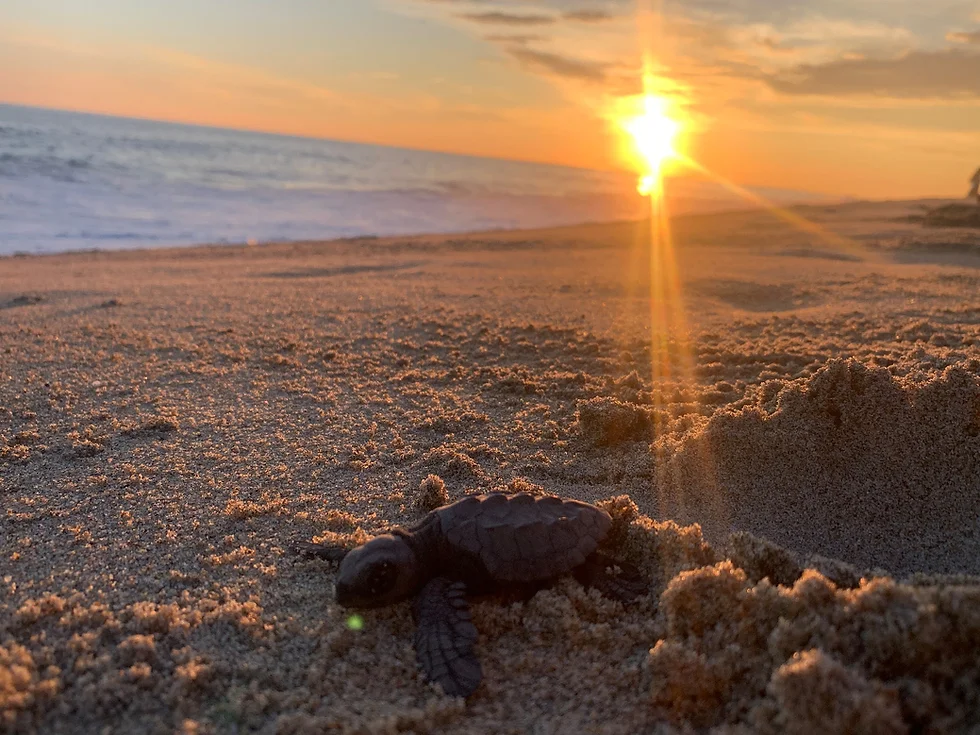
Ethical turtle releases depend on prioritizing hatchling welfare over visitor experience. The Vive Mar hatchery enforces conservation-first protocols that minimize human interference during this critical phase of the turtles' life cycle.
The conservation efforts at Playa Bacocho focus on protecting vulnerable sea turtle populations through scientific intervention and habitat management. These programs are designed to increase survival rates during the most critical stages of the turtle life cycle.
The hatchery primarily monitors the Olive Ridley (Lepidochelys olivacea), Leatherback (Dermochelys coriacea), and Green turtle (Chelonia mydas) species on local beaches. These species are categorized under various levels of conservation concern due to habitat loss and poaching.
In natural conditions, only about one in every 1,000 hatchlings reaches adulthood due to intense predation from birds, crabs, and fish. Hatchery programs improve these odds by protecting eggs from predators and human interference until they are ready to hatch.
Turtle eggs typically remain in the protected hatchery environment for this duration depending on the ambient sand temperature. Temperature during incubation is critical as it determines the sex of the developing hatchlings.
Staff and volunteers patrol the coastline to locate nests and relocate eggs to the protected hatchery zone. This practice prevents the loss of nests to high tides or illegal harvesting.
The release process occurs at night or dusk to ensure the hatchlings can properly imprint on the beach environment. This orientation is necessary for female turtles to return to the same nesting grounds once they reach sexual maturity.
Every release involves recording biometric data, including carapace measurements and nest success rates. This information contributes to broader regional studies on marine biodiversity and population health.
The turtle release program operates daily at Playa Bacocho. Visitors should aim to arrive during the designated sunset window to ensure hatchling safety.
The turtle release site is located at Playa Bacocho, situated on the western side of Puerto Escondido. Visitors can reach the beach via taxi or private vehicle, followed by a short walk to the hatchery.
Direct to Playa Bacocho from Puerto Escondido center
Follow signs toward Playa Bacocho via Boulevard Costero
Walking from the nearest beach access point to the hatchery
For the best experience, plan your arrival between 17:00–18:30. Reaching the site by sunset aligns with optimal conditions for hatchling safety and natural orientation.
Attending ethically means preparing in ways that minimize disruption to hatchlings and align with conservation protocols.
Everything you need to know about is the turtle release in puerto escondido ethical
The program is managed by professional biologists who prioritize the survival of the olive ridley sea turtle over tourism. By following strict non-interference protocols, visitors help support genuine conservation efforts rather than exploitative wildlife encounters.
The project follows biological protocols that ensure hatchlings are released only when they are strong enough to navigate the surf. Because the focus remains on the lifecycle of the species, this Puerto Escondido wildlife experience is considered a gold standard for responsible travel.
While you can arrive at the hatchery during public hours, checking the official site for operational updates ensures you do not miss the daily release. The organization prioritizes the natural cycles of the nests, meaning activities are subject to the hatchlings' readiness.
Yes, the experience provides a safe, educational environment for families to learn about marine biology and ocean health. Staff provide clear instructions on how to interact with the environment without disrupting the natural orientation of the animals.
This fee directly funds the ongoing operation of the hatchery, including nest protection, predator control, and equipment for the team. It is a mandatory conservation contribution that ensures the survival of local populations and maintains the facility at Playa Bacocho.
Ethical standards require that participants never touch the hatchlings, as human contact can introduce bacteria or disrupt their natural migration signals. Visitors observe from a designated distance, allowing the turtles to crawl to the ocean on their own.
The release depends on the natural nesting cycle of the sea turtles, which is influenced by environmental conditions and the time of year. Because the site operates based on biological needs, you should always verify that a release is scheduled for your visit date.